
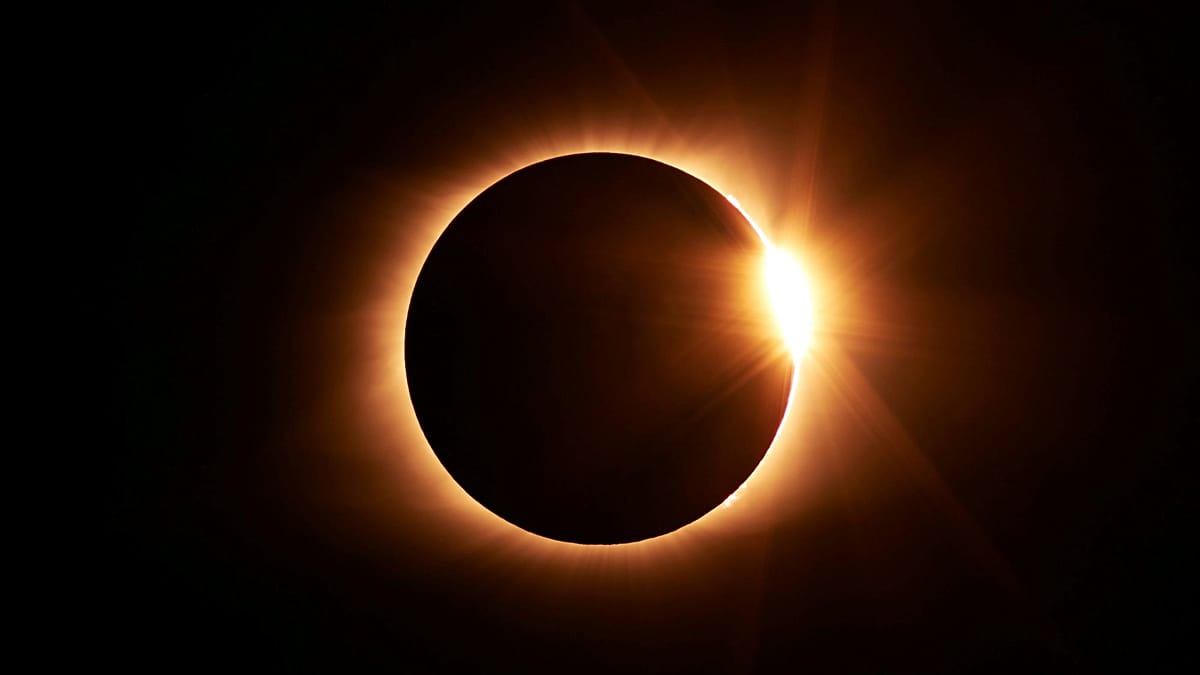
The partial eclipse will be visible across the whole of the UK, although the amount of the Sun covered will vary depending on location. At its peak, between around 6.58pm and 7.15pm BST, up to 96% of the Sun's disc will be hidden.
Devon, Cornwall and western parts of Pembrokeshire are expected to experience the greatest coverage, with between 94% and 96% of the Sun obscured. Much of Wales, Northern Ireland, parts of the West Midlands and South West, along with western Scotland, could see between 92% and 94% coverage.
⚠️ IMPORTANT SAFETY WARNING
Never look directly at the Sun during the eclipse, even when most of the Sun is covered. Doing so can cause serious and permanent damage to your eyesight, and you may not feel any pain while the damage is occurring.
Anyone watching the eclipse should use only certified solar eclipse glasses that are specifically designed for direct solar viewing, or view the event through a properly filtered solar telescope.
Ordinary sunglasses, camera filters, welding goggles, binoculars or standard telescopes are not safe for looking at the Sun. Looking at the Sun through a camera, smartphone or other optical device without a specialist solar filter can also cause severe eye damage.
Solar eclipse glasses should be undamaged and used according to the manufacturer's instructions. If you are unsure whether a pair is genuinely certified for solar viewing, do not use them.
For those without suitable eye protection, a pinhole projector provides a safe alternative. With your back to the Sun, the eclipse can be projected onto a piece of white card through a small hole in another piece of card.
Kitchen items such as colanders and draining spoons can also create multiple small images of the eclipsed Sun on the ground.
Weather conditions could determine how much of the spectacle people are able to see. Many areas of the UK are expected to have clear skies, but cloud could affect parts of north Wales, northern England, Scotland and Northern Ireland during the peak of the eclipse. Some western parts of Scotland and north-western Northern Ireland could also see outbreaks of rain.
While the UK will experience a partial eclipse, parts of Europe will witness the much rarer total eclipse.
Northern Spain is expected to attract hundreds of thousands of visitors, with totality visible from locations including Bilbao, Valencia and Palma in Mallorca. Barcelona and Madrid are expected to see more than 99% of the Sun covered.
The total eclipse will also be visible from parts of Russia, Greenland, Iceland and Portugal.
During totality, the Moon will completely cover the Sun, causing the sky to darken and revealing the Sun's normally hidden corona, a vast halo of superheated plasma surrounding the star.
Astronomers describe a total solar eclipse as one of nature's most spectacular events, but the opportunity to see one from the UK remains exceptionally rare.
The next time the Moon will obscure as much of the Sun over the British Isles is not expected until 2081, while the next total solar eclipse visible from the UK will not occur until 2090.
The eclipse is expected to provide a spectacular evening of astronomy across the UK, weather permitting, but anyone planning to watch should put eye safety first and make sure they have the correct certified equipment before looking towards the Sun.